Skip the price shock of 5-star luxury. Quanzhou’s 4-star hotels offer polished comfort near West Street and the Tuojiang River, right where the city’s living history unfolds.
The morning light hits the twin stone pagodas of Kaiyuan Temple, casting long shadows across the red-brick facades of West Street. In Quanzhou, China, the air carries the faint, smoky sweetness of tangerine peel tea and the distant hum of trishaw bells. This UNESCO World Heritage site is not a museum; it is a functioning city where commerce, faith, and daily life overlap. For travelers, navigating this blend of ancient port grandeur and modern Fujian efficiency starts with where you sleep. The city’s 4-star hotels hit a pragmatic sweet spot: they provide reliable air conditioning, English-speaking staff, and breakfast buffets, often at half the cost of the international luxury chains, while placing you within walking distance of the old city’s core.
Exploring the Old City and Beyond
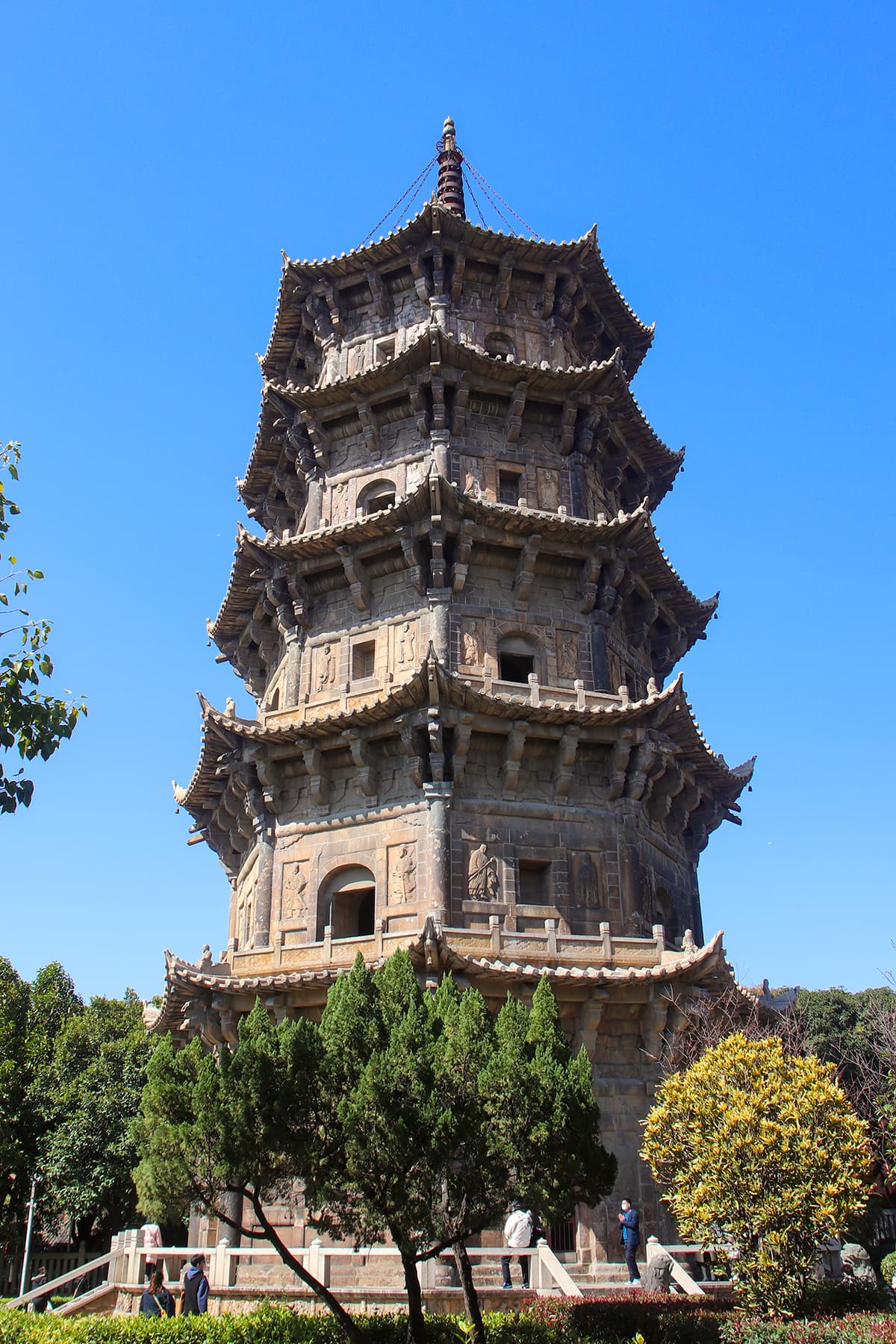
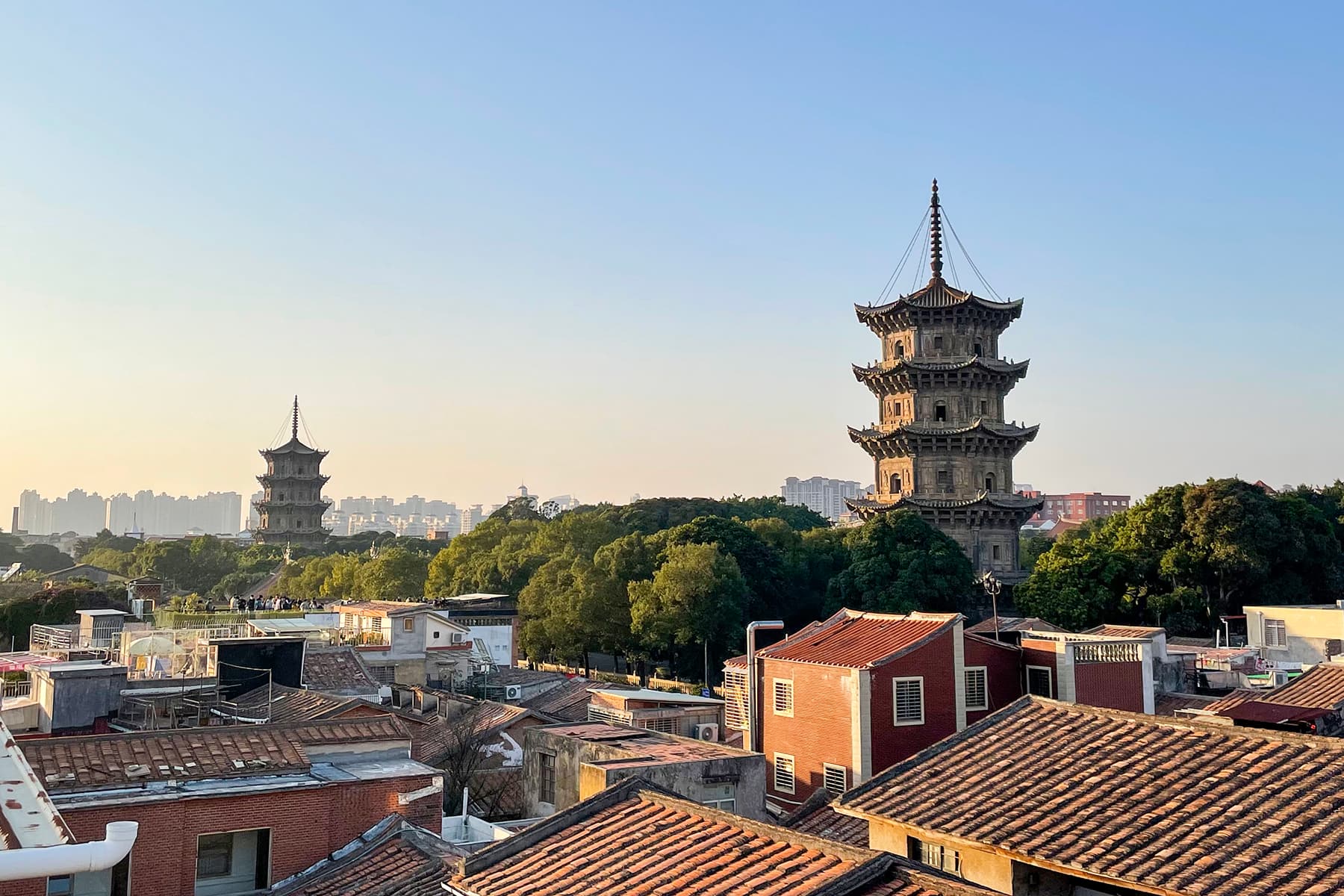
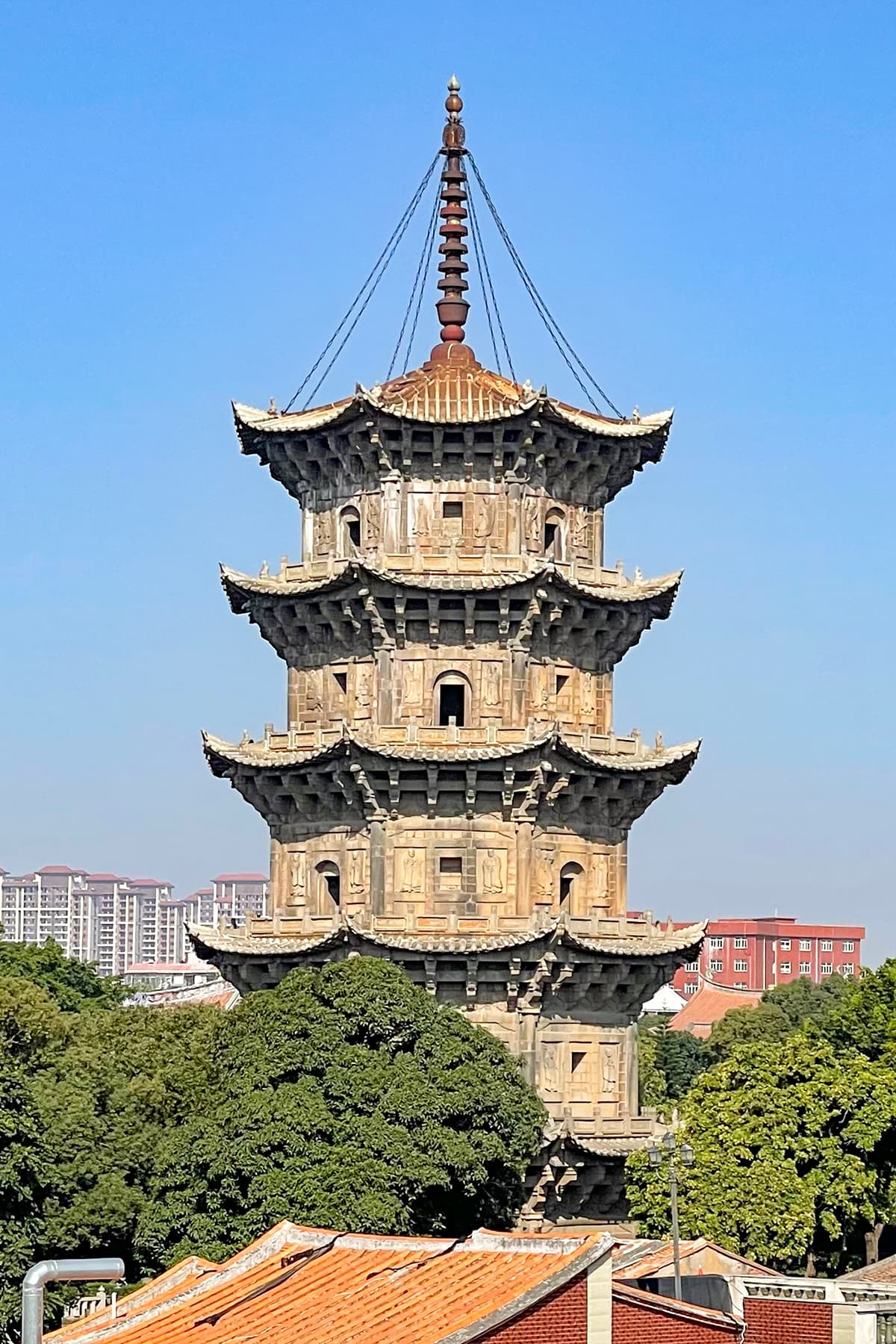
Quanzhou’s historic center is compact enough to explore on foot, but its layers require a steady pace. Start at Kaiyuan Temple (Kaiyuan Si), the largest Buddhist temple in Fujian. Its twin pagodas, the Zhenhai and Renshou, are carved from granite and date back to the Song Dynasty. The intricate reliefs on the stone bases show figures from Hindu, Buddhist, and local folklore, a testament to Quanzhou’s history as the "Emporium of the World." A short walk south brings you to West Street (Xi Jie), a pedestrian-friendly artery lined with banyan trees, antiques shops, and vendors selling stinky tofu.
For a different texture, head to Tumen Street (Tumen Jie). Once the primary departure point for the Maritime Silk Road, this lane is narrower, quieter, and dense with traditional Minnan architecture featuring upturned eaves and intricate brick carvings. Don’t miss the Cliff of Guanyin (Putuo Shan) nearby, a small hill where the sea breeze cools the summer heat and offers a view of the modern skyline merging with the port.
Local Culture: Tea, Faith, and Food
In Quanzhou, hospitality is ritualized around the teacup. Minnan (Southern Fujian) culture revolves around Gongfu tea. You will see small clay teapots and tiny cups on nearly every shop counter and hotel lobby. It is customary to accept an offer of tea; drink it slowly, and do not rush the pour. The local favorite is Tieguanyin (Iron Goddess) or aged Baozhong oolong, often infused with dried tangerine peel (chenpi), which adds a citrusy depth to the tannins.
Faith is visible, not abstract. Quanzhou is a rare place in China where mosques, Catholic churches, and Buddhist temples stand blocks apart. The Qingjing Mosque, built in the 10th century, features Arabic inscriptions carved into stone in a style that blends Islamic geometry with Chinese craftsmanship. Respect the silence here; remove your shoes if entering prayer halls, and dress modestly.
Food is equally distinct. Mala Tang is less common here than in Sichuan; instead, look for Quanzhou-style noodles or shrimp dumplings (xiahu jiao). For a street-side experience, try tusu (a vegetarian meat-like dish made from gluten) or wheat cakes (miantiao shao). The flavors are savory, slightly sweet, and heavily reliant on fermented bean pastes and garlic.
Practicalities: Transit, Money, and Timing
Getting around Quanzhou is straightforward. The city is served by Quanzhou Railway Station (also known as Fengze Station), which connects to Xiamen (20 minutes by high-speed rail) and Fuzhou (1.5 hours). For intra-city travel, Didi (the local ride-hailing app) is reliable and cheap; a ride from the station to the old city costs around 15–25 CNY. Alternatively, shared bicycles (like Meituan or HelloBike) are abundant. Scan the QR code with your Alipay or WeChat Pay to unlock one; costs are roughly 1.5–3 CNY per 30 minutes.
Cash is less necessary but still useful for small street vendors. Alipay and WeChat Pay are the standard for hotels, restaurants, and transit. Most 4-star hotels accept international credit cards, but small shops may not.
Spring (March to May) offers mild temperatures (15–25°C) and lower humidity, making it ideal for walking the old city. Avoid July and August, which bring heavy rain and heat. If you visit during the Spring Festival (January/February), book hotels weeks in advance, as domestic travel surges.
When to Go and Who It’s For
Quanzhou suits travelers who prefer slow travel over checklist tourism. It is not a city for nightlife seekers; the streets quiet down by 9 PM. It is ideal for history buffs, foodies, and those interested in religious architecture. A two-night stay is sufficient to absorb the old city, though three nights allow for a day trip to Mount Qingyuan or the Luoyang Bridge (a 12th-century stone bridge in nearby Jinjiang).
Families will find the city walkable and safe, with plenty of open spaces. Solo travelers can navigate easily, as many 4-star hotels offer English-speaking concierges who can arrange guides. The cost of living is lower than in Shanghai or Beijing; a meal at a mid-range restaurant runs 40–80 CNY, and a night in a 4-star hotel typically ranges from 300–600 CNY, depending on the season.
Short FAQ
Do I need a visa to visit Quanzhou? Yes. Most international travelers require a Chinese visa. Check the latest entry policies with your local Chinese consulate, as some nationalities may qualify for 144-hour visa-free transit if connecting through nearby hubs like Xiamen or Shanghai.
Is English widely spoken in Quanzhou? In 4-star hotels and major tourist sites like Kaiyuan Temple, basic English is common. In local markets and smaller eateries, Mandarin or Hokkien (Minnan dialect) dominates. Download a translation app and learn a few phrases for smoother interactions.
How do I get from Xiamen to Quanzhou? The high-speed rail from Xiamen North Station to Quanzhou Station takes about 20 minutes. Trains run frequently throughout the day. Taxis or Didi rides from the station to the old city take 15–20 minutes.
Quanzhou rewards patience. Its 4-star hotels provide a comfortable base to explore a city that has shaped global trade for centuries, without the premium price tag of a luxury resort.