Escape the coast for Gharyan’s cave dwellings and Berber pottery in Libya’s Nafusa Mountains. A rugged, authentic highland experience.
The air in Gharyan does not smell of the sea, though Tripoli is only an hour’s drive away. Instead, it carries the dry, dusty scent of stone and the faint, earthy aroma of clay drying in the sun. Perched within the Jebel Nafusa range, this town of roughly 100,000 people offers a landscape that is more geology than urban planning. The streets climb, descend, and wind around the mountain’s spine, leading visitors to homes carved directly into the earth. For travelers seeking a retreat that prioritizes geological wonder and artisanal craft over coastal leisure, Gharyan provides a stark, compelling contrast to the Mediterranean beaches of western Libya.
Cave Dwellings and Stone Architecture
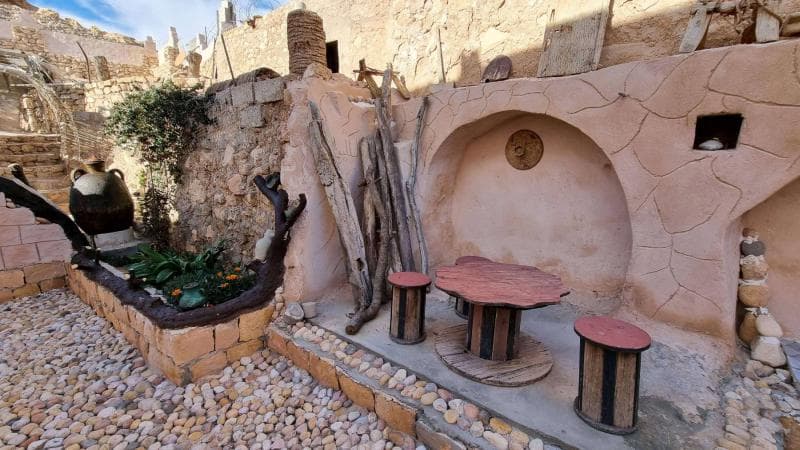
The defining feature of Gharyan is its integration with the Jebel Nafusa mountainside. Traditional Berber architecture here serves as a response to the climate and the terrain. The cave dwellings, or grottoes, are hollowed out of the limestone rock, providing natural insulation against the intense summer heat and the chill of winter nights. Walking through the older quarters, one encounters entrances that blend seamlessly into the cliff face, marked only by wooden doors or simple iron gates.
These structures are active homes, workshops, and storage spaces. The texture of the stone is rough, warm to the touch even in the shade, and often stained with the ochre hues of the local soil. The layout of the town follows the contours of the mountain, meaning that a stroll often involves climbing steep, narrow steps rather than walking on flat pavement. This verticality gives Gharyan a distinct rhythm, where views open up suddenly to reveal terraced slopes and the rugged peaks of the Nafusa range stretching into the distance. The silence in these upper areas is profound, broken only by the occasional call to prayer or the distant hum of a generator.
The Art of Berber Pottery
While the caves draw the eye upward, the ground level of Gharyan is defined by its craft. The town is explicitly noted for its pottery stalls and artisanal production, a tradition that has sustained local families for generations. Walking through the market areas, the visual landscape is dominated by stacks of earthenware: large storage jars, intricate tagines, and delicate plates, all in varying shades of terracotta, beige, and black.
The pottery here is functional, heavy, and crafted with a technique that reflects the available local clay. The patterns are often geometric, echoing the architectural lines of the surrounding Berber structures. Visitors can observe artisans at work in small workshops, where the sound of clay being shaped on a wheel or hand-molded provides a steady, rhythmic backdrop to the market noise. Engaging with these craftsmen offers a tangible connection to the region’s heritage. The prices are generally accessible, and buying directly from the stall supports the local economy directly. The tactile experience of holding a freshly glazed bowl, still warm from the kiln, is a sensory anchor in a town that appeals as much to the hands as to the eyes.
Getting Around the Highlands
Transport logistics in Gharyan require flexibility. There is no operational railway in Libya; the rail network has been non-functional since 1965, and no specific lines or stations serve Gharyan. Consequently, road access is the only option. The town is approximately 80 km (50 miles) from Tripoli, a distance that typically takes about an hour to cover by car, depending on road conditions and checkpoints.
Once in Gharyan, public transport is sporadic and unreliable for tourists. Shared and private taxis are the primary mode of movement. These are not metered cabs in the Western sense; fares are negotiated before departure. English is rare in the region, so having a local guide or using a translation app is essential for navigating taxi negotiations and asking for directions. The roads within the town are narrow and winding, designed for smaller vehicles rather than large buses. For those wishing to explore the surrounding Jebel Nafusa area, hiring a private driver for the day is the most practical, albeit more expensive, option. It allows for stops at remote viewpoints and access to higher elevations where the cave dwellings are most concentrated.
Dining and Local Sustenance
Culinary options in Gharyan reflect the broader Libyan heritage, with influences from the Mediterranean and the Sahara. While specific dishes unique solely to Gharyan are not widely documented in international travel media, the local cuisine is characterized by hearty, resourceful cooking. Expect meals centered around couscous, lamb, and fresh vegetables from the mountain terraces.
Dining is often a communal affair. Restaurants in the town center are simple, with plastic chairs and tables, focusing on flavor rather than ambiance. The staple ingredients include olive oil from the ancient groves of the Nafusa Mountains, which adds a distinct, fruity bitterness to many dishes. Bread is a constant companion, used to scoop up stews and dips. For a true local experience, look for small family-run eateries rather than tourist-focused establishments. The food is affordable, fitting well within the daily budget of €20 to €40. Tea, sweet and strong, is served throughout the day and serves as a social lubricant as much as a beverage.
Practicalities and Safety
Planning a trip to Gharyan requires careful consideration of timing and safety. The best months to visit are March to May and September to November, when the temperatures are mild and the mountain air is crisp. Summer months can be extremely hot, making exploration of the steep streets and caves uncomfortable. Winter brings cold, and occasional rain, which can make the unpaved paths slippery.
Safety is a paramount concern. The current risk level for Libya is high, and travelers are advised to check government travel advice before planning any trip. This is not a destination for casual, unprepared tourism. It requires respect for local customs, discretion, and a willingness to adapt to logistical challenges.
Who is this for? Gharyan appeals to the solo adventurer, the photographer interested in architecture and texture, and the slow traveler who values authenticity over comfort. A stay of two to three days is sufficient to explore the town, visit the pottery workshops, and absorb the atmosphere of the Nafusa Mountains. Beyond that, the surrounding region offers more, but it requires deeper local knowledge.
Frequently Asked Questions
Is it safe to visit Gharyan? Check current travel advisories for Libya from your government. The risk level is generally considered high. If you do go, exercise extreme caution, avoid large gatherings, and stay informed about local conditions.
How do I get to Gharyan from Tripoli? There are no trains. You must travel by road, approximately 80 km. Shared taxis or private hires are the standard methods. Public buses are infrequent and may not stop in Gharyan.
What is the daily budget for Gharyan? Expect to spend between €20 and €40 per day, covering accommodation, food, and local transport. Costs are low, but prices for tourists can be higher if you do not negotiate or use local guides.