Zuwārah’s history is written in stone and sea salt. A guide to the town’s archaeological remains and the living architecture of its Old City.
Zuwārah sits on the Mediterranean coast of western Libya, a town defined by its Berber (Amazigh) heritage and its strategic position along the shore. The air here carries the weight of centuries, moving across the narrow streets of the Old City with a steady, indifferent rhythm. This place demands observation. You come here to see what remains. The heritage sites of Zuwārah are not grand institutions of glass and steel. They are modest containers for memory. They hold the fragments of a civilization that lived by the sea, traded with the world, and survived the silence of time. To visit them is to accept that some things are fixed, and others are lost.
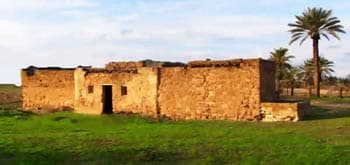
The Zuwārah Museum
The Zuwārah Museum serves as the primary repository for the town’s tangible history. Located within the coastal settlement, it acts as a focal point for understanding the local heritage. The collection connects the present to the ancient history of the region, a reminder that this land has been inhabited for millennia.
Inside, the air is still. The exhibits offer a glimpse into the daily life of the people who built this town. You will find artifacts that speak of a maritime culture—tools, pottery, and items that reflect the trade routes that once connected Libya to the wider Mediterranean world. The museum is not vast. It does not rely on spectacle. It relies on the quiet dignity of the objects on display.
Visiting the Zuwārah Museum requires patience. There may not be extensive signage in multiple languages. The experience is one of looking closely. You examine the texture of old ceramics, the wear on metal tools, the faded colors of textiles. These are the remnants of lives lived in the same sun that beats down on you today. The museum is a holding space for history. It is a place where you surrender to the past. It is a chance to see the continuity of human existence in a region often defined by its disruptions.
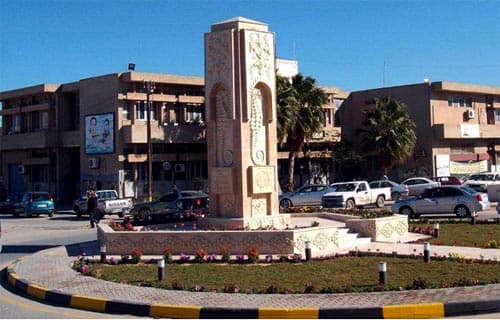
The Old City: An Open-Air Archive
If the museum is the interior, the Old City of Zuwārah is the exterior archive. The narrow streets are structural evidence of a specific way of life. The traditional architecture, with its whitewashed walls and shaded alleys, was designed to keep out the heat and the prying eye. Walking through these streets is an act of navigation through time.
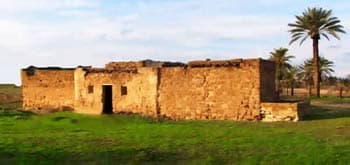
The Old City contains historic landmarks, including the remnants of the old castle that stands as a sentinel over the town. The castle is a symbol of defense, of the need to protect what is valuable. Its walls are thick, its presence imposing. It does not invite you in; it demands your respect. The streets around it are a convergence point where daily life unfolds, moving through the shadows of history.
The architecture here is functional and beautiful in its austerity. The buildings are close together, creating a sense of enclosure. The Old City is a museum without walls. Every stone, every archway, every worn step is an exhibit. You do not need a ticket to enter. You only need the willingness to look. The silence of the streets is heavy, broken only by the occasional sound of a door closing or a voice calling out. It is a silence that speaks.
Practicalities of Visit
Travel to Zuwārah is not a simple matter of booking a ticket. The transport infrastructure in Libya is limited. There is no functional public railway system for passengers. Specific bus route data for Zuwārah is not readily available or consistent. You must rely on local knowledge and private arrangements. This adds a layer of uncertainty to the journey, but it also adds to the sense of arrival. You are not dropped off at a convenient station; you are brought to a place that has resisted easy access.
When visiting the heritage sites, dress modestly. Respect the local customs. The climate in summer is hot and dry. Carry water. Wear light clothing that covers the skin. The sun is a force here, not a companion. It tests your endurance.
There are no fixed prices or official opening hours that are widely published for the Zuwārah Museum or the Old City sites. You must be prepared for variability. The museum may be closed for administrative reasons. The Old City is always open, but the best time to walk its streets is in the early morning or late afternoon, when the heat is less oppressive. Do not expect a guided tour unless you have arranged one in advance. The experience is solitary. You are responsible for your own interpretation.
Local Context and Etiquette
Zuwārah is a Berber town with a strong sense of identity. The local language is a mix of Arabic and Berber dialects. English is not widely spoken. You should learn a few basic phrases in Arabic. A simple greeting goes a long way. It shows respect. It acknowledges the humanity of the people you are observing.
Food in Zuwārah is simple and fresh. Seafood is a staple, given the town’s location on the Mediterranean coast. You will find fish, grilled and seasoned with local spices. The taste is of the sea and the earth. There are no famous dishes specific to Zuwārah that are documented in international guides, but the quality of the ingredients is evident. Eat where the locals eat. Avoid the tourist traps, if there are any. In a place like Zuwārah, authenticity is not a marketing tool. It is a necessity.
Etiquette is important. Do not photograph people without permission. Do not touch artifacts in the museum. Do not wander into private homes. The Old City is a living community, not a set. The people who live there are not exhibits. They are going about their lives, trying to maintain a sense of normalcy in a region that has faced significant challenges. Be respectful. Be quiet. Be aware.
When to Go and Who It Is For
The best time to visit Zuwārah is in the spring or autumn, when the temperatures are moderate. Summer is hot, and the sun can be unforgiving. If you must travel in summer, plan your activities for the early morning or late evening. The midday heat is a barrier. It keeps you indoors, in the shade, reflecting on what you have seen.
There are no major holidays in the next six months that would significantly impact your visit. The town is small, and crowds are not a concern. You will have the museums and the Old City to yourself. This is a destination for the traveler who seeks depth, who is willing to engage with a place that is complex and challenging. It is for the solo traveler, the historian, the photographer, the writer. It is for those who understand that travel is not about comfort, but about connection.
Stay for two or three days. This is enough time to explore the Zuwārah Museum, walk the streets of the Old City, and sit by the Mediterranean coast. You will not leave with a souvenir. You will leave with a perspective. You will see the world differently. You will understand that some places are not meant to be conquered, but to be witnessed.
FAQ
Is it safe to visit Zuwārah? Safety in Libya varies by region and time. Always check current travel advisories from your government before planning a trip. Many governments, including the US State Department and the UK FCDO, advise against all travel to Libya due to high risks of kidnapping, armed conflict, and civil unrest. Zuwārah is in the northwest, which has seen periods of relative stability compared to other parts of the country, but conditions can change rapidly.
Do I need a visa? Yes. Most travelers will need a visa to enter Libya. The process can be complex and time-consuming. Start the application well in advance through the Libyan embassy or consulate in your country.
Can I use credit cards? No. Cash is king in Libya. Credit cards are not widely accepted. Bring enough local currency or US dollars to cover your expenses. ATMs may not be reliable or may be out of service.