Sua offers no marked paths, only the open bushveld. Hiking here is a choice to accept the terrain on its own terms.
The road from Maposa to Sua does not announce itself. It is a strip of red earth, nine kilometers northwest, that dissolves into the Central District’s endless horizon. There are no trailheads here. No wooden signposts pointing to scenic overlooks. No rangers waiting to check your permit for a nature reserve that does not exist. You come to Sua to walk, not to sightsee. This is a location for walking.
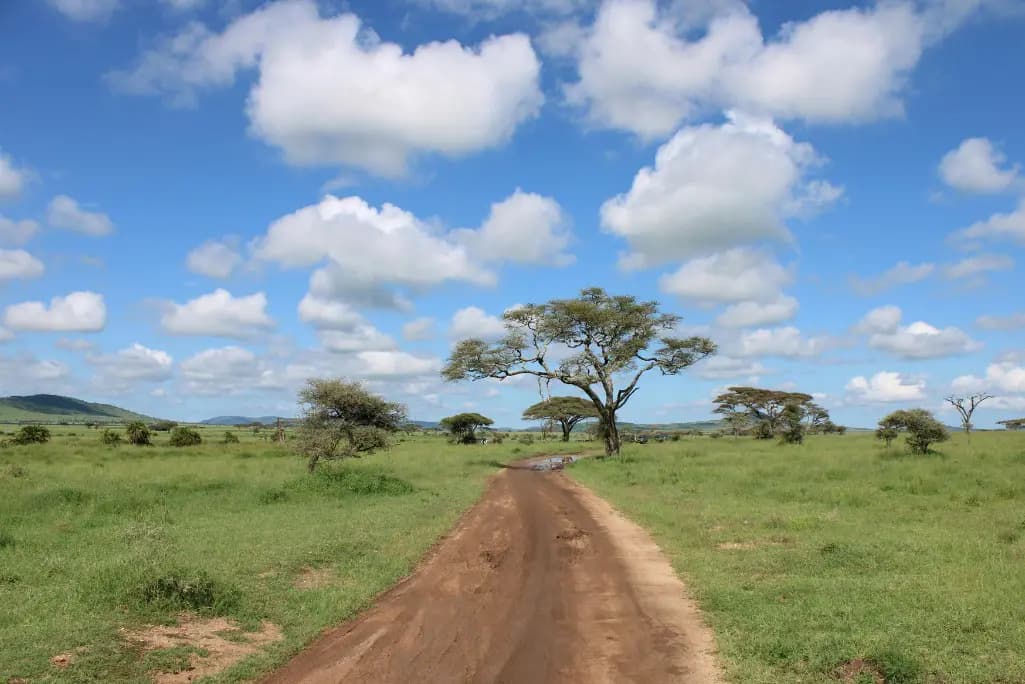
The Terrain of the Central District
Sua is a locality, not a park. It sits in the agricultural heartland of Botswana, a place where the land is worked, not preserved for tourists. The "trails" here are the boundaries between fields, the tracks left by livestock, and the dry riverbeds that cut through the bushveld. To hike in Sua is to walk without a map. The ground is hard-packed clay in the dry season, turning to thick, clinging mud when the rains come. The vegetation is low scrub and acacia, offering shade only in fleeting patches.
There is no elevation change to speak of. The landscape is flat, deceptive in its simplicity. The heat does not rise; it presses down. You walk in a circle of silence, broken only by the wind moving through the grass. The rule of the place is indifference. It does not care if you are tired. It does not care if you are lost. The horizon remains the same distance away, no matter how many kilometers you cover.
Walking Without Markers
In cities, hiking is an escape from structure. In Sua, the lack of structure is the entire experience. There are no designated paths. You choose a direction. You walk until the terrain changes, or until you decide to turn back. This requires a different kind of attention. You must watch your footing. The ground hides stones and roots. The sun exposes everything.
Most visitors to this part of Botswana drive past Sua, heading north to the Okavango Delta or Chobe National Park. Those places offer water, wildlife, and infrastructure. Sua offers neither. It offers the space between. If you are hiking here, you are likely doing so because you have chosen to stay in the village, or because you are traveling by foot between localities. The walk serves as a mode of transit. The distance to Maposa is short, but the heat makes it long. You walk to feel the weight of the distance. You walk to understand why people stay.
Practical Realities
There is no gear shop in Sua. There is no rental station. You bring what you need, or you do not hike. The essential items are water and shoes. The water must be sufficient for the return journey. The shoes must be able to handle red dust and sharp stones. There are no rest stops. There are no vending machines. The nearest supply point is likely in Maposa, or further still in Serowe.
Timing is the only variable you can control. The sun is most punishing between 11:00 and 15:00. Walking during these hours is unnecessary risk. The early morning, before the heat settles, is the only time the air feels breathable. The evening, after the sun drops, brings a sudden coolness. The insects come out then. Mosquitoes are fewer in the dry season, but they are still present. You walk in the margins of the day.
The walk requires no money. There are no entry fees. There are no guides to hire. The land is lived on by locals. Respect the boundaries of private farms. Do not cross fences. Do not disturb livestock. The locals know the land. They do not need your advice. They do not need your presence. You are a guest in their space.
When to Go
The dry season, from May to October, is the only viable window for walking in the Central District. The roads are passable. The grass is short. The mosquitoes are fewer. June and July are the coolest months, but the nights are cold. August and September are hotter, but the days are clear. The wet season, from November to April, turns the earth to mud. Walking becomes difficult. Roads become impassable. The insects are everywhere.
Sir Seretse Khama Day is July 1, 2026. This is a national holiday. If you are in Sua during this time, expect higher demand for transport and accommodation in nearby towns. President’s Day follows on July 20, 2026. These dates mark periods of increased local activity. If you prefer solitude, avoid them. If you want to see the community, stay. Botswana Day is September 30, 2026. By then, the heat is intense. The dry season is ending. The rains are approaching. This is a time of transition. The land looks different. The air feels heavier.
FAQ
Is it safe to hike alone in Sua? Yes, but you must be self-sufficient. There are no rescue teams. There are no cell towers. If you get lost, you must find your way back. Tell someone your route. Carry extra water.
Are there hiking trails in Sua? No. There are no marked trails. The area is rural and agricultural. You walk on open land or farm boundaries.
What should I wear? Sturdy shoes and light, breathable clothing. A hat is essential. The sun has no cover.