Walk the wide boulevards of Bishkek, where Soviet marble meets ancient nomadic heritage at Ala-Too Square.
Bishkek, the capital of Kyrgyzstan, presents a landscape defined by contrast. The city’s layout is dominated by the wide, tree-lined boulevards and imposing, marble-faced public buildings left behind by the Soviet era. Beneath this orderly urban grid lies a deeper narrative of Central Asian nomadic heritage and independent resilience. For the traveler, the historic landmarks here serve as active stages for daily life, politics, and commerce. This guide focuses on the confirmed historic anchors of the city, from the central square to the sprawling markets, helping you navigate the physical and cultural history of this mountain capital.
Ala-Too Square: The Heart of the City
The primary historic anchor of Bishkek is Ala-Too Square. It serves as the symbolic center of the nation’s identity. The square is dominated by the Independence Monument, a towering obelisk that acts as a focal point for both national celebrations and everyday civic life. When visiting, observe the scale of the plaza. It is designed to accommodate large crowds, reflecting its role in the country’s political history.
The architecture surrounding the square sets the tone for the rest of the city. You will notice the consistent use of white marble and grand, symmetrical facades, a hallmark of the Soviet-style architecture that defines Bishkek’s aesthetic. The square is clean, open, and often bustling with locals walking their dogs, musicians playing, or tourists taking photographs. It is a place to stand and absorb the rhythm of the capital.
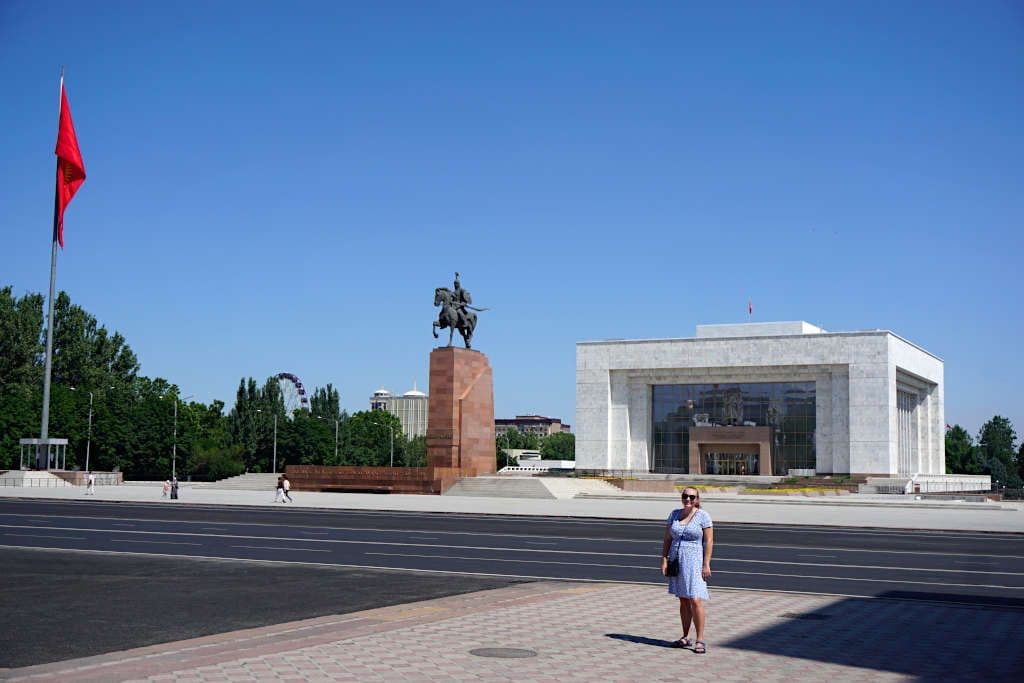
The Kyrgyz State Historical Museum
Located directly on Ala-Too Square, the Kyrgyz State Historical Museum is the most logical next stop for understanding the region’s past. The building itself is a testament to the era in which it was constructed, fitting seamlessly into the monumental style of the square. Inside, the exhibits are organized to guide visitors through millennia of history.
The collection highlights the ancient civilizations of the region, including artifacts from the nomadic tribes that once roamed the steppes. You will find intricate metalwork, jewelry, and tools that speak to a mobile lifestyle adapted to the harsh mountain environment. The museum also covers the Soviet-era history, providing a necessary context for the urban landscape you see outside. For a traveler, this museum offers the essential "why" behind the city’s layout and cultural identity. It is a compact but comprehensive introduction to Kyrgyzstan’s narrative.
The State Museum of Applied Arts
While the Historical Museum covers the broad strokes of time, the State Museum of Applied Arts focuses on the tangible craftsmanship of the Kyrgyz people. Located in the city center, this museum showcases traditional handicrafts that have been passed down through generations.
Here, the history is tactile. You will see examples of felt-making, embroidery, and wood carving, all of which are deeply rooted in the nomadic heritage of the region. These items served as functional necessities for life in yurts and on the move. The museum provides a quiet counterpoint to the grandeur of Ala-Too Square, offering a glimpse into the domestic and artistic lives of ordinary Kyrgyz people. It is a smaller, more intimate experience that complements the broader historical narrative.
Osh Bazaar: A Living Market
History in Bishkek exists in the daily commerce of Osh Bazaar. Located west of the city center, this large, picturesque produce market is a sensory overload in the best possible way. It is one of the oldest and largest markets in the city, serving as a vital hub for locals.
Walking through Osh Bazaar, you are surrounded by the colors of fresh produce, the smell of spices, and the sounds of bargaining. It is a place where the agricultural traditions of the region meet modern urban life. You can find local specialties here, including the ingredients for Beshbarmak, the traditional Kyrgyz dish of hand-pulled noodles with meat. While the specific vendors may change, the market’s role as a community anchor remains constant. It is a recommended stop for anyone wanting to experience the city’s pulse beyond its official landmarks.
Practical Details for Visitors
When planning your visit to Bishkek’s historic sites, timing is key. The city experiences hot summers and cold winters. The most comfortable times to explore the outdoor spaces, such as Ala-Too Square and the surrounding boulevards, are during the spring (April–May) and autumn (September–October). These seasons offer mild temperatures and clear skies, ideal for walking tours.
Transportation within the city is straightforward. Bishkek is connected to the wider region via rail links to Kazakhstan, such as the line from Almaty, and the Trans-Kyrgyzstan Highway. For local travel, the wide streets are well-suited for walking, especially in the center. Taxis are readily available and generally affordable, though prices can vary. Always agree on a fare before entering the vehicle.
For dining, Osh Bazaar offers a place to eat alongside shopping. You can find local food stalls offering fresh produce and traditional dishes. If you are interested in the culinary side of Kyrgyz culture, seeking out a meal featuring Beshbarmak or other local staples is a rewarding experience.
When to Go and Who It’s For
The next major holiday in Bishkek is Independence Day on August 31, 2026. This is a significant national celebration, and Ala-Too Square will likely be the center of festivities, with fireworks and gatherings. If you are visiting around this time, expect larger crowds and a festive atmosphere. Other notable dates include the Days of History and Commemoration of Ancestors in November, which may see quieter, more reflective moods in the city.
Bishkek is suitable for a variety of travelers. Solo travelers will find the city safe and easy to navigate, with English spoken in many tourist-facing establishments. Families will appreciate the open spaces of Ala-Too Square and the educational value of the museums. For slow travelers, the city offers a relaxed pace, with enough historic depth to spend several days exploring at a leisurely rate. A stay of three to four days is sufficient to cover the main landmarks and absorb the local culture.
FAQ
Is Bishkek safe for tourists? Yes, Bishkek is generally considered safe for tourists. The city is clean, well-lit, and has a visible police presence in central areas. Standard precautions, such as keeping an eye on your belongings in crowded places like Osh Bazaar, are recommended.
What is the best way to get around Bishkek? The city center is very walkable. For longer distances, taxis are the most convenient option. The city is also served by the Bishkek Railway Station, which connects to regional rail networks for travel to neighboring countries.
Do I need to book museums in advance? For the Kyrgyz State Historical Museum and the State Museum of Applied Arts, advance booking is typically not required. However, it is always a good idea to check opening hours before your visit, as they may vary during holidays or special events.