Kpalimé tests your patience with heat and humidity, then rewards you with the cold shock of the Cascade de Kpalimé. It is a place where nature dictates the schedule, not the hotel concierge.
The air in Kpalimé presses against you, thick with the scent of wet earth and ripening cocoa. This is the southern highlands of Togo, a region defined by its verticality and its water. You come here because the landscape demands attention. The town sits at a convergence of routes, historically a hub for the transport of oil palm and cocoa, but today it serves as a holding ground for travelers seeking the raw mechanics of West African nature. There is no illusion here. The roads are unpaved in sections, the power can flicker, and the waterfalls do not care if you are on schedule.
The Weight of Water
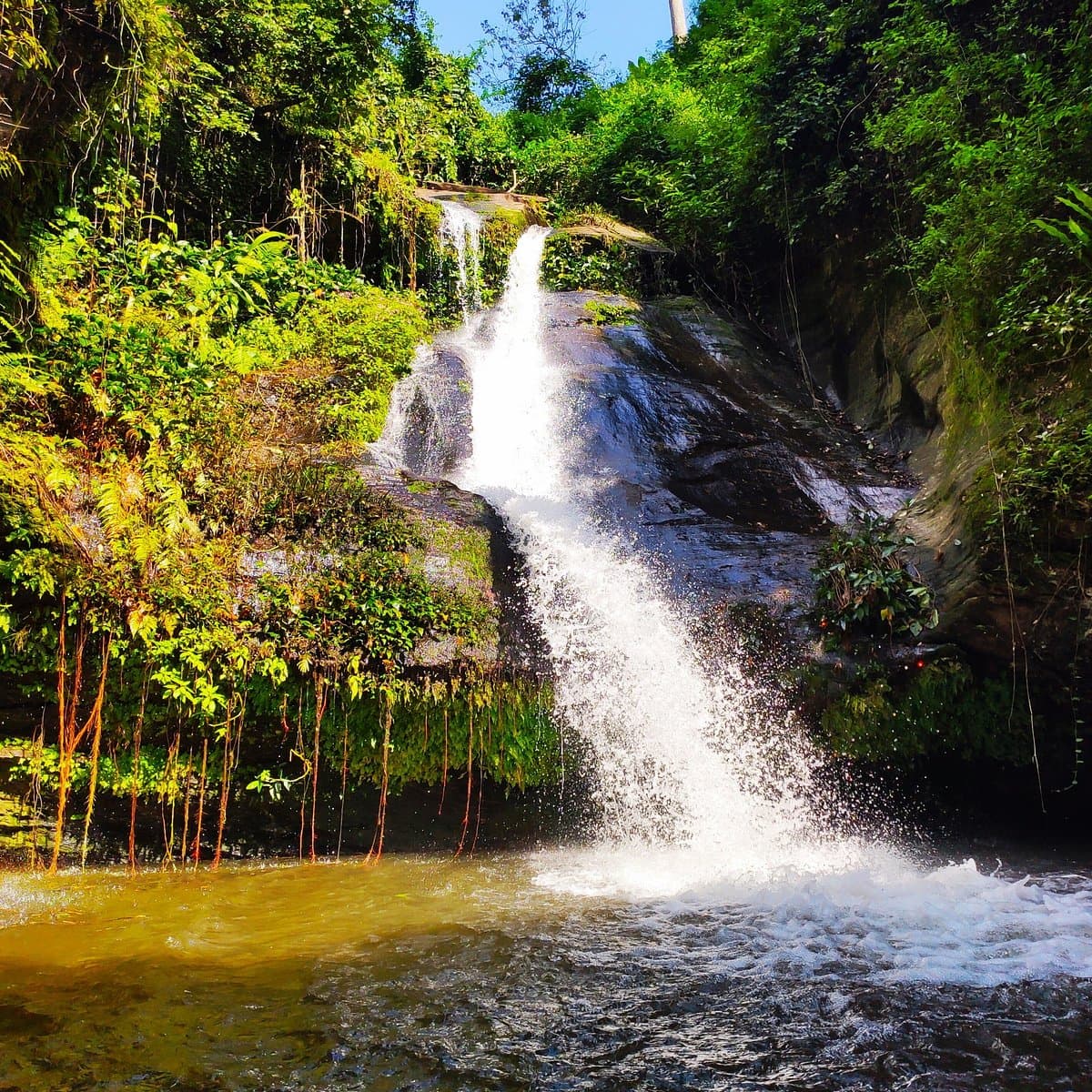
The Cascade de Kpalimé is a geological fact. Located just outside the town center, the falls are a series of cascades that drop through a forested gorge. The water is cold, drawn from the higher elevations of the Mono River basin. To reach the swimming areas, you descend a path that tests your footing. The rock is slick with moss and spray.
Swimming here is an act of surrender. You step into the pool and the heat of the afternoon vanishes, replaced by a chill that travels up your spine. The noise of the town—motorcycles, shouting vendors, distant music—fades into the roar of the falling water. It is a convergence point where people gamble with chance, sliding down natural rock chutes or jumping from low ledges. There are no lifeguards. There are no rules posted on the rocks. You assess the depth, you judge the current, and you decide.
Further south, the Cascade de Womé offers a different texture. It focuses on the stillness of the pool below. The area is known for its butterfly populations, a detail that is easy to miss if you are not looking. The insects move with a slow, deliberate grace, contrasting with the chaotic energy of the town. Visiting Womé requires a detour, a commitment of time and fuel. It is not on the main road. You go there because you want to see the water in a quieter context, away from the crowds that gather at the main falls.
The Artisan’s Logic
Culture in Kpalimé is produced in the open air. The Village Artisanal de Kpalimé is a cluster of workshops where local craftsmen work with wood, pottery, and textiles. The artisans work for a living, not for an audience.
The smell of burning wood and wet clay hangs in the air. You watch carvers shape mahogany and iroko into masks and furniture. The tools are simple: chisels, knives, and hammers. The skill is in the hand, not the machine. If you buy something here, you are buying the time it took to make it. There is no negotiation in the sense of a game; there is a price, and there is a counter-price. You watch the artisan’s face. You listen to the tone of his voice. You decide if the object is worth the cost.
The Village Artisanal is a holding space for strangers pretending they control the outcomes ahead. You want to leave with a souvenir, a token of your visit. The artisan wants to sell his work. The transaction is inevitable, but the terms are yours to set. Do not rush. Sit down. Watch the process. The value of the object is tied to the patience you show in buying it.
The Forest and the Silence
The surrounding highlands offer a different perspective on the landscape. The forest is dense, flat in its understory, and quiet. You can walk the trails, watching the birds and the insects. It is a place to think, to rest, to recover from the exertion of the falls. The light here is different. It is softer, more diffuse. The air is cooler. It is a pause in the rhythm of the day.
Practicalities of the Route
Getting to Kpalimé requires a decision. The road from Lomé is the standard route. It takes time. The distance is roughly 100 kilometers, but the condition of the road varies. You will encounter potholes, dust, and slow-moving trucks. The journey demands endurance. You should leave early in the morning to avoid the heat and the traffic. Bring water. Bring cash. The stops along the way are informal, and cards are not accepted.
Money in Kpalimé is local. The CFA franc is the currency. You will need small bills for markets, taxis, and entry fees. ATMs are available in the town center, but they can be unreliable. Do not assume you will find one when you need it. Carry enough cash for your stay. Prices are approximate, but you can expect to pay around 1,000–2,000 CFA for a local meal, and 5,000–10,000 CFA for a taxi ride within the town.
When to Go
The best time to visit Kpalimé is during the wetter seasons, when the landscapes are lush and the waterfalls are full. The dry season brings dust and lower water levels. The falls become less dramatic, the pools shallower. If you want to see the water in its full force, you must come when the rains are falling.
There are no major holidays in the next six months that will affect your travel. The town is quiet, the crowds are small. This is not a place for mass tourism. It is for the slow traveler, the one who does not mind waiting. You can spend two or three days here. One day for the falls, one day for the artisans, one day for the forest. It is enough.
FAQ
Is it safe to swim in the Cascade de Kpalimé? It is natural, not regulated. There are no lifeguards. You must assess the depth and the current yourself. Swim at your own risk.
Can I take the train from Lomé? No. There is no passenger railway service connecting Lomé and Kpalimé. Take a bus or a private car.
What should I bring? Water, cash in CFA francs, and sturdy shoes for the rocky paths. The humidity is high, so bring light clothing and a rain jacket.