Hakha, Myanmar: 6,200 feet up, no Michelin stars, just cold air and high standards.
The altitude in Hakha is a structural fact. At over 6,200 feet above sea level, the capital of Chin State sits on a plateau that strips the humidity from the air and the pretense from the landscape. There are no Michelin stars here. There is no red guidebook validating the local eateries or the guesthouses. This is a feature. In Hakha, the standard of excellence is not dictated by Parisian critics but by the rigors of elevation, logistics, and local discipline. For the traveler who understands that true quality is often found in the absence of branding, Hakha offers a stark, efficient audit of what a destination can be when it is forced to rely on its own merits.
The Elevation Standard
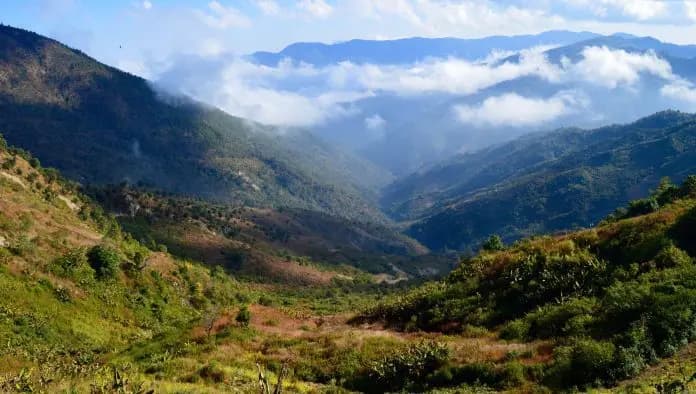
Hakha does not ask for your admiration. It demands your acclimatization. The town is built into the slopes of a highland basin, a geographic reality that dictates the pace of life and the condition of the infrastructure. The air is thin enough to notice but not so thin as to incapacitate the average visitor. It is crisp, often cool, regardless of the broader Myanmar summer heat. This climate is a filter. It keeps the casual tourist away and attracts those who prefer their environments unheated and unadorned.
The view from the central plateau is a lesson in symmetry. The terrain drops away into deep valleys, shrouded in mist that clings to the tree lines with mechanical precision. There are no famous temples or museums to clutter the skyline. The landmark is the landscape itself. The absence of man-made monuments forces the eye to appreciate the geological architecture. It is a clean slate. For the business traveler or the minimalist explorer, this lack of visual noise is a luxury. You are not competing with history. You are observing the present, in real time, under a sky that feels closer than in the lowlands.
Access and Logistics
Efficiency is the primary currency in remote regions. Hakha is not connected to the national railway network. The Myanmar Railways system, while extensive in the central plains, does not extend to this highland capital. This is a consequence of topography. The mountains resist the iron road. Therefore, the only viable entry points are by air or by road.
The quickest route from Mandalay to Hakha takes approximately four and a quarter hours. This figure likely includes flight time and ground transfer, a combination that suggests a direct or single-stop flight followed by a short taxi ride. For the traveler prioritizing time, this is the benchmark. The alternative is the road, a journey that transforms a few hours into a day or more, winding through passes that test the suspension of any vehicle.
The cost of entry is a data point worth noting. The cheapest way to reach Hakha from Mandalay is approximately $51. This price point is significant. It is not cheap, but it is not prohibitive. It signals that access is controlled by scarcity, not by luxury. You pay for the privilege of elevation. When you arrive, you are not greeted by a concierge in a tailored suit. You are greeted by the wind and the steep gradient of the main road. The transport infrastructure is functional, not ornamental. Taxis and buses are the primary modes of local movement. They are reliable, provided you understand that schedules here are suggestions, not contracts.
The Culinary Audit
In the absence of Michelin recommendations, the traveler must become their own critic. The local food scene in Hakha is not documented in international guides, which means it is uncorrupted by the expectation of foreign palates. The cuisine is Chin, distinct from the Burmese staples found in Yangon or Mandalay. The ingredients are local, sourced from the terraced farms that scar the hillsides.
You will not find named restaurants in the search results. This is an opportunity. The dining experience in Hakha is decentralized. It happens in small, family-run establishments that do not advertise. The food is simple. It is cooked with fire and oil, with an emphasis on texture and heat. There are no confirmed specific dishes in the available data, but the pattern of highland cooking is consistent: preserved meats, fresh vegetables, and rice. The flavor profile is robust, designed to sustain the body in cold weather.
The service is direct. Waiters do not smile for the camera; they serve the food and clear the plate. This is not rudeness; it is efficiency. In a place where resources are limited, waste is the only sin. The dining experience is an audit of sustenance. You eat to fuel the next day’s exploration. The quality is judged by the energy it provides, not by the presentation on the plate. For the discerning traveler, this is a refreshing departure from the performative dining culture of global hubs. Here, food is fuel. It is honest. It is effective.
Accommodation and Atmosphere
There are no five-star hotels in Hakha. The concept of luxury, as defined by thread counts and infinity pools, is irrelevant at this altitude. The accommodation options are basic, functional, and clean. They are guesthouses and small lodges that prioritize warmth and security over aesthetics. The walls are thick to keep out the cold. The beds are firm to support the back. The lighting is adequate, not ambient.
The atmosphere in Hakha is quiet. The town does not sleep, but it does not party. The nightlife is non-existent, which is a benefit for those who value rest. The streets are empty after dark, lit by sparse streetlamps that cast long, sharp shadows. The silence is heavy, broken only by the occasional distant bark of a dog or the hum of a generator. This is not loneliness; it is solitude. It is a space to think, to work, to plan. For the remote worker or the writer, Hakha is an ideal environment. There are no distractions. There are no notifications. There is only the work and the view.
Planning the Visit
The best time to visit Hakha is during the dry season. The summer months bring rain, which turns the roads into mud and the views into gray static. The dry season offers clear skies and manageable temperatures, allowing for a full audit of the region. There are no major holidays in the next six months that will impact travel plans, which means the town remains quiet and accessible year-round, weather permitting.
The ideal duration for a stay is three to four days. This allows time for acclimatization, exploration of the immediate town, and perhaps a day trip to the surrounding villages. The pace is slow. There is no rush. The goal is not to see everything, but to understand the essence of the place. Hakha is not a destination to be conquered; it is a place to be observed. It rewards the traveler who is willing to sit still, to watch the light change, to listen to the wind.
FAQ
Do I need a visa for Hakha? Yes. Hakha is in Myanmar. All foreign visitors require a valid Myanmar visa. Check the official Myanmar e-Visa website for current requirements and processing times.
Is it safe to travel alone in Hakha? Generally, yes. The town is quiet and the locals are reserved but not hostile. However, exercise standard caution. Avoid walking alone in unlit areas at night. The isolation can be a factor in emergencies.
What currency is used? The Myanmar Kyat (MMK) is the local currency. Credit cards are rarely accepted. Bring sufficient cash in small denominations for daily expenses. ATMs may be unreliable or out of service.