Słońsk offers a quiet, structured itinerary: wetland birding, historical reflection, and direct access via the DK32 corridor.
Słońsk does not perform for tourists. It does not offer the curated charm of a resort town or the chaotic energy of a capital. It is a place of boundaries. The German border lies twelve kilometers west, a hard line drawn on the map and reinforced by the asphalt of National Road DK32. The town itself is quiet, structured, and largely indifferent to the casual passerby. This lack of distraction allows for a precise evaluation of the environment. You come here for two things: the biological density of the Warta Mouth National Park and the historical weight of the former concentration camp site. Everything else is logistics.
The railway station, a relic of a more connected era, is silent. Passenger traffic ceased in 1993. The tracks were dismantled in the twenty-first century. There is no romance in this decay, only efficiency. The state removed what was no longer profitable. You cannot arrive by train. You arrive by car or bus, navigating the DK32, a direct corridor that serves as the town’s primary artery. This isolation filters out the noise. What remains is a landscape of wetlands, history, and the quiet competence of local operators who understand that visitors here are looking for substance, not spectacle.
The Wetlands: Ujście Warty National Park
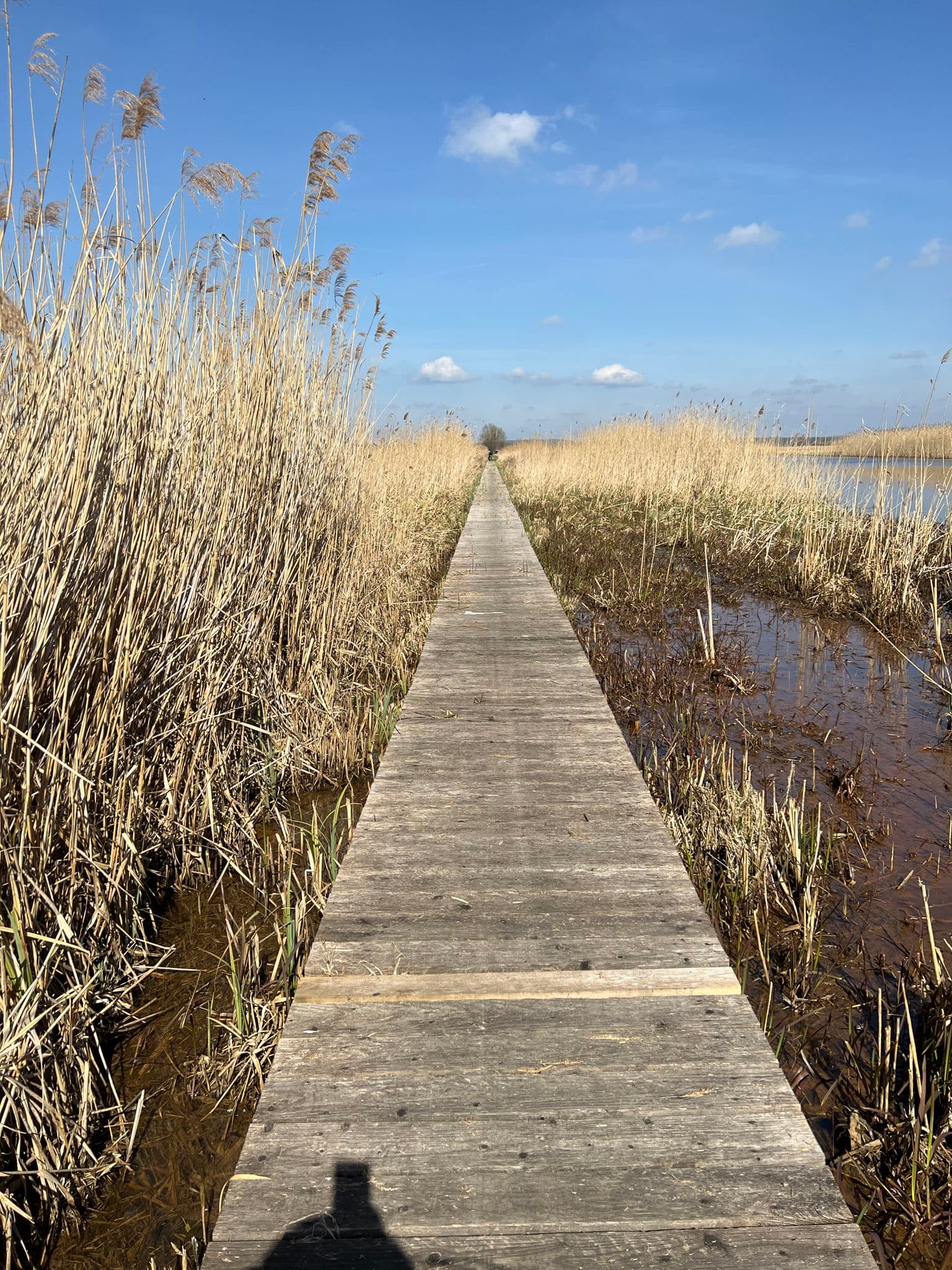
The Warta Mouth National Park (Ujście Warty) is the primary asset of this region. It is a vast wetland complex, a biological system that operates independently of human schedules. For the serious observer, this is an exercise in careful observation. The park is a designated Important Bird Area, hosting thousands of species. The reeds are dense, and the water is still, creating a surface that reflects the flat, diffuse summer light with metallic precision.
Birdwatching here requires discipline. You do not wander; you position yourself. The terrain is flat, which aids visibility but demands patience. The park borders Słońsk, making it accessible, but the sheer scale of the wetlands can be disorienting without guidance. The vegetation is thick, creating a wall of green that obscures movement until it is too late. Professional guidance is a necessity for efficient observation. The local expertise turns a chaotic landscape into a readable text. You are looking for specific behaviors, specific plumage, and specific moments of interaction between species. The park delivers these, but only if you respect its boundaries.
Historical Reflection: The Concentration Camp Museum
History in Słońsk is anchored in the site of the former Nazi concentration camp. The museum located here serves as a repository for the facts of that period. It is a place for careful exploration. You examine the records, the structures, and the evidence of human cruelty and the subsequent erasure. The atmosphere is controlled. There is no attempt to soften the reality with decorative elements. The presentation is clinical, which is appropriate. The goal is not to evoke emotion for its own sake but to present the historical record with accuracy.
The site is a reminder of the region’s turbulent past. It stands in contrast to the natural indifference of the nearby wetlands. Nature does not remember; it only adapts. The museum ensures that memory is preserved, structured, and accessible. It is a necessary counterweight to the tranquility of the park. You cannot visit one without acknowledging the other. They define the duality of the place: the beauty of the natural world and the horror of human history. Both are present. Both demand attention.
Infrastructure and Transit: The Reality of Access
Transportation to Słońsk is a test of planning. The former railway station, once a hub for Line 414 connecting Gorzów Wielkopolski to Chyrzyno, is now a ghost. The tracks are gone. The station building stands as a monument to inefficiency, or perhaps to the changing priorities of state infrastructure. You must arrive by road. National Road DK32 is the only viable option for most travelers. It is a direct route, well-maintained, and efficient. It connects Słońsk to the broader network of Polish roads and, crucially, to the German border.
The absence of rail service simplifies the logistics. You do not need to check train schedules or worry about delays. You drive. The journey from major cities like Warsaw or Poznań is straightforward, albeit long. The road conditions are good. The signage is clear. The town itself is small, so parking is rarely an issue. You park, you walk, you observe. The lack of public transport within the town is compensated by its compact size. You do not need a bus to move from the hotel to the park entrance. The distances are short. The efficiency is high.
Local Operations: Guided Nature Tours
In a place with limited infrastructure, the quality of local operators becomes the primary metric for success. Specialized birdwatching tours operate from Słońsk, providing the necessary link between the visitor and the wetlands. They do not offer generic tours. They offer specialized expeditions. The guides are knowledgeable, precise, and uninterested in small talk. They know where the birds are. They know how to move through the reeds without disturbing them. They know the subtle signals that indicate the presence of rare species.
This level of expertise is rare. It is the result of years of observation and practice. The tours are not about comfort; they are about results. You may stand in the rain. You may walk through mud. You may wait for hours in silence. But you will see what you came to see. The operator’s reputation is built on this reliability. They do not promise miracles. They promise access. And they deliver. For the serious traveler, this is the only way to engage with the park. It transforms a passive visit into an active investigation.
Practicalities: Timing and Logistics
The best time to visit Słońsk is during the spring and autumn migration seasons. Summer is warm, but the birds are less active. Winter is cold, and the wetlands are frozen. Spring and autumn offer the highest density of species. The light is better. The temperatures are manageable. If you are planning a trip, aim for May or September. The crowds are minimal. The prices are stable. The experience is focused.
Accommodation options are limited. You will likely stay in a local guesthouse or a nearby hotel in a larger town like Gorzów Wielkopolski. The choices are functional, not luxurious. This is appropriate. You are here for the landscape and the history, not for the amenities. Book in advance, especially during peak migration periods. The local infrastructure is small, and capacity is limited.
Currency is the Polish Złoty (PLN). Cash is preferred in smaller establishments, though cards are accepted in most hotels and restaurants. English is spoken by tour operators and in larger hotels, but Polish is the dominant language. Learn a few basic phrases. It shows respect. It opens doors.
FAQ
Is Słońsk safe for solo travelers? Yes. The town is quiet, with low crime rates. The primary risk is logistical: getting lost in the wetlands without a guide. Stick to marked paths or hire a local expert.
Can I reach Słońsk by train? No. The railway station is closed, and the tracks have been dismantled. You must arrive by car or bus via National Road DK32.
What should I pack for birdwatching in Ujście Warty? Binoculars, field guides, waterproof clothing, and sturdy boots. The terrain is wet and uneven. Comfort is secondary to functionality.